
MedAxiom Blog
Tuesday, October 27, 2026 | Nicole Dellise, DNP, APRN, FNP-BC, NEA-BC, CHFN, CCK, FACC
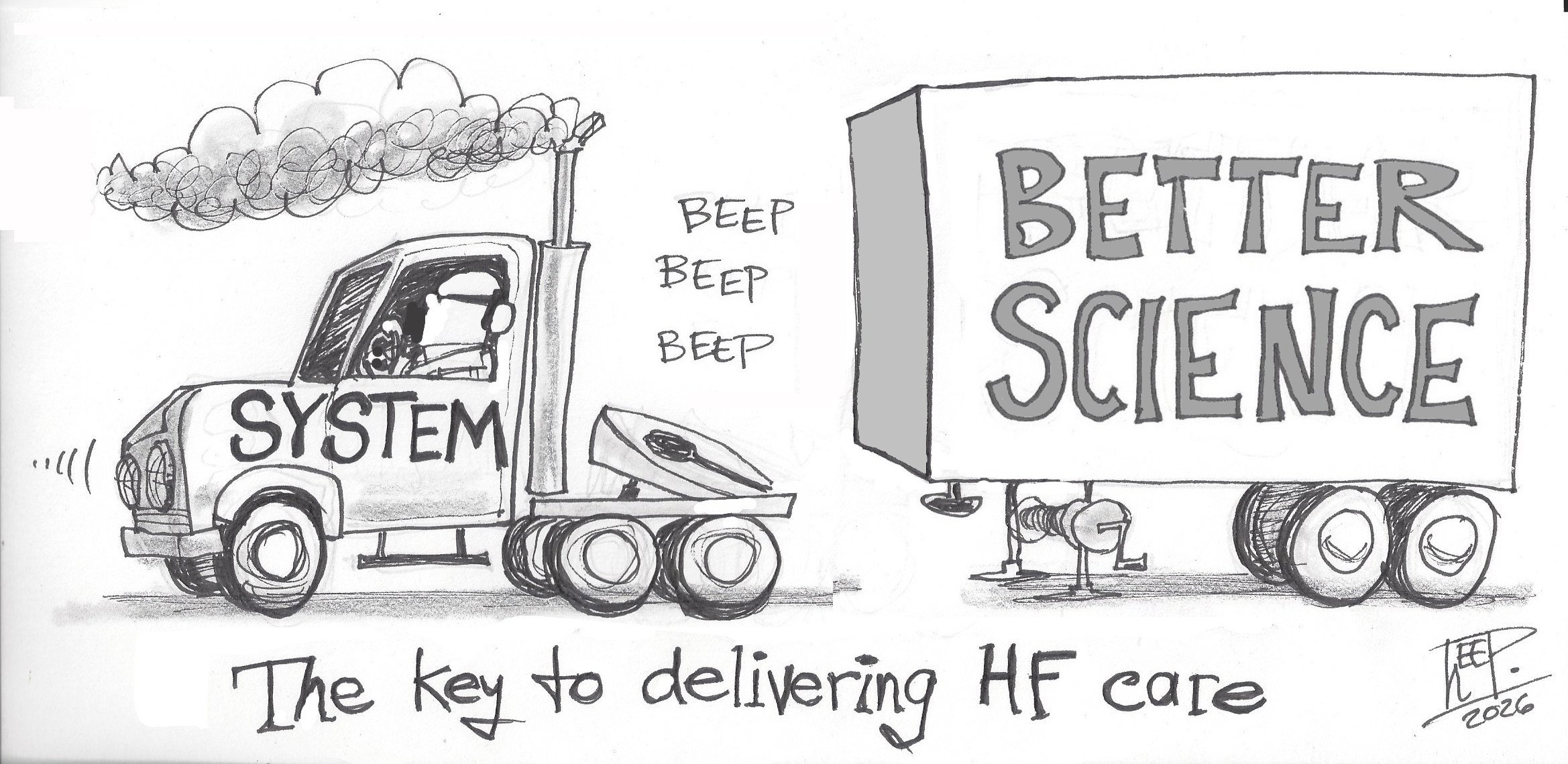 For decades, cardiovascular leaders have focused on improving heart failure (HF) care through better science. We invested in research, expanded diagnostics, and developed therapies unimaginable just a generation ago. Today, we have more evidence, technology and therapeutic options than at any other point in the history of HF care. Yet significant gaps remain between what we know and what patients actually receive.
Delays in diagnosis, incomplete optimization of guideline-directed medical therapy, fragmented transitions, avoidable hospitalizations and inconsistent access to specialty expertise remain persistent challenges. These gaps are not simply the result of insufficient clinical knowledge. An important – and often overlooked – driver is how our systems are designed. Perhaps the next frontier in HF care is not simply discovering more. Perhaps it is designing better.
HF itself teaches us an important lesson: structure determines function. When structural changes impair the heart's ability to function, we do not simply ask the heart to work harder. We identify what is limiting performance, intervene, and create the conditions for better function. Our healthcare systems deserve the same approach.
The Structure-Process-Outcomes framework offers a useful lens. Healthcare organizations spend enormous energy measuring outcomes: mortality, readmissions, quality metrics, patient experience, utilization and financial performance. When results fall short, our instinct is often to respond at the outcome level. We launch another initiative, build another dashboard, provide more education, or ask teams to focus harder on the metric. But outcomes are the end of the story, not the beginning. A process produced the outcome. A structure enabled – or constrained – the process.
Consider medication optimization. When patients are not receiving recommended therapies, the answer is not always more education. We should ask different questions:
- Who owns optimization?
- How quickly can the patient be seen again?
- Are physicians, advanced practice providers (APPs), nurses, pharmacists and care coordinators working within defined pathways?
- Who identifies the patient who remains undertreated months after diagnosis?
- Does the team have the capacity, data, workflows and accountability necessary to act?
These are not simply clinical questions. They are design questions.
The same principle applies across the continuum:
- If advanced HF referrals occur too late → examine the referral structure.
- If patients are lost between hospitalization and follow-up → examine transitions of care.
- If remote monitoring generates data without action → examine ownership and escalation pathways.
- If patients wait months for specialty expertise → examine how that expertise is organized and distributed.
The outcome may be where the problem becomes visible. The structure may be where it began.
This matters because HF does not live within the walls of an HF clinic. Patients move across primary care, general cardiology, emergency departments, inpatient units, imaging, electrophysiology, post-acute care, home-based services and community settings. Many of the decisions that shape a patient's trajectory occur before that patient ever reaches an HF specialist.
This conversation becomes even more important as care delivery and reimbursement evolve. The Centers for Medicare & Medicaid Services Ambulatory Specialty Model (ASM) reinforces a broader movement toward longitudinal specialty care, coordination and accountability beyond an individual encounter. For cardiovascular organizations, ASM is more than a reimbursement conversation. It is a care-delivery conversation. It challenges us to think differently about how patients are identified, how risk is recognized, how therapy is optimized, how care is coordinated, and how avoidable utilization is prevented. Those capabilities do not emerge accidentally. They are the product of intentional design.
HF, therefore, cannot remain solely the responsibility of a dedicated program or a handful of specialists. It is increasingly a system-level responsibility. The organizations prepared for this future will connect people, processes, technology, data and clinical expertise across the cardiovascular continuum. The future may belong not to centers of excellence, but to systems of excellence.
Building those systems requires us to reconsider where expertise lives. We cannot place an HF specialist in every community in the U.S., nor should patients have to travel long distances every time specialty input is needed. We need to become better at moving expertise rather than always moving patients. Virtual care, remote monitoring, digital platforms, decision support and AI create extraordinary opportunities to extend specialty knowledge beyond traditional boundaries. But technology alone is not transformation.
A remote monitoring platform is not a care model. A virtual visit is not an access strategy. An algorithm that identifies risk is not an intervention. Technology creates value when it is embedded within a system that defines ownership, establishes workflows, creates escalation pathways, and connects information to action. Otherwise, we risk digitizing the same fragmentation we were attempting to solve.
This is also why we should think differently about access. In HF, access is a quality strategy. Patients cannot benefit from therapies they never receive, specialists they never reach, or expertise that remains inaccessible because of geography, capacity or system design. And access to expertise does not always require access to a specialist visit. It may mean a clear escalation pathway for a community clinician, an APP-led optimization program, pharmacist-supported titration, virtual consultation, remote monitoring or decision support embedded into clinical workflow.
Clinical innovation will continue to transform HF care. But the value of the next therapy, diagnostic tool, device, digital platform or AI solution will ultimately depend on the system into which we place it. Perhaps the next great innovation in HF will not be a therapy at all. Perhaps it will be a system capable of identifying patients earlier, connecting information to action, moving expertise rather than always moving patients, and reliably delivering evidence-based care wherever patients enter the continuum.
We have spent decades advancing the science of HF. Now we have an opportunity to advance the system that delivers it. HF has already taught us the lesson: structure determines function.
Illustration by: Lee Sauer

Leave a Comment